
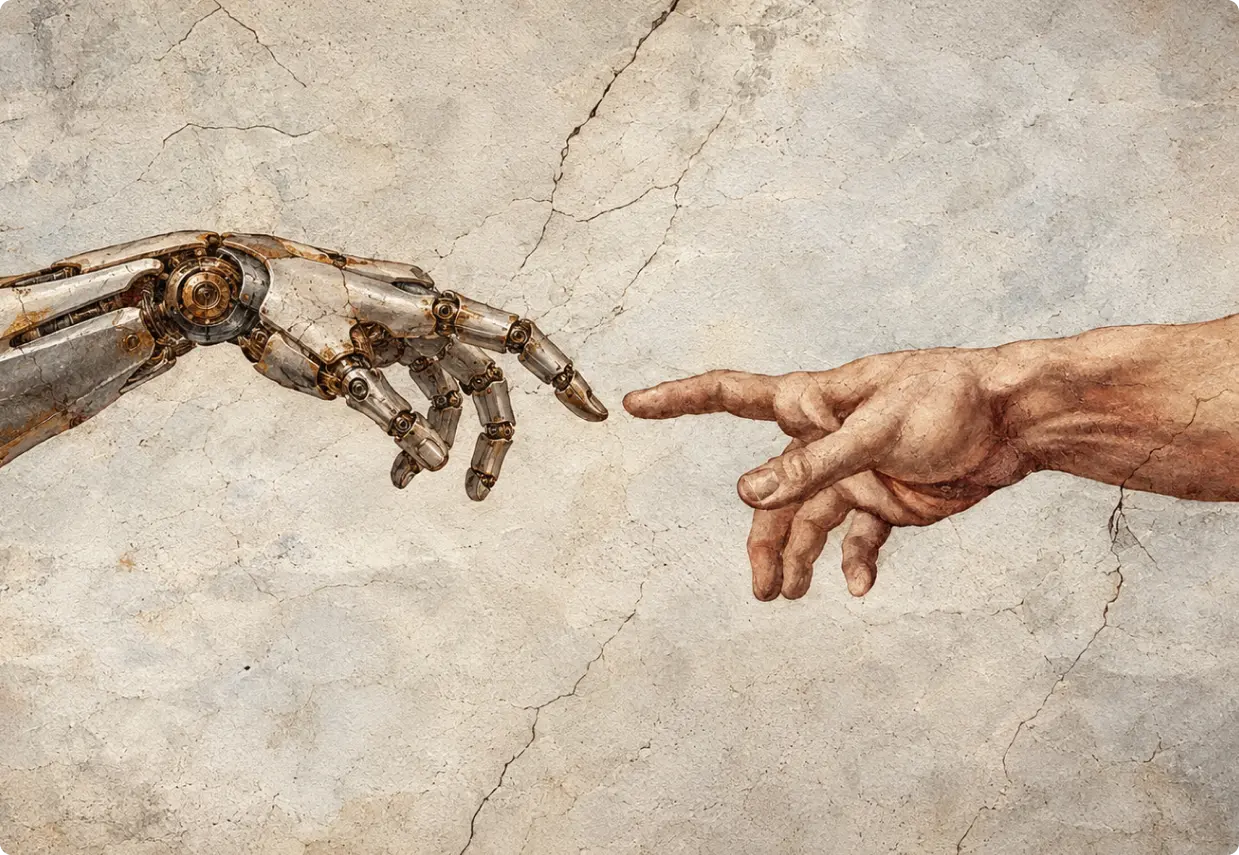
The best designers are moving from execution to strategy, directing AI tools, curating outputs, and solving the problems machines can’t see.
From Tool to Capability Layer
AI adoption among enterprises doubled in the first half of 2025, jumping from 5% to 10%. By early 2026, ChatGPT had reached 800 million users. These aren’t abstract milestones. They signal something concrete: AI has crossed the threshold from occasional tool to embedded capability layer.
For UX design, that shift is structural. AI is now woven into research, ideation, wireframing, and optimization. Teams using it well are seeing 20-30% reductions in build time and project costs. The bottlenecks that once defined design timelines are breaking open.
But here’s what the headlines miss. AI isn’t replacing designers. It’s changing what designers do. The best ones are moving from execution to strategy, from drawing every screen to directing the machine, curating the output, and solving the problems AI can’t see.
Here’s what’s actually changing.
The Three Ways AI Is Changing the UX Workflow
1. Research and Ideation Acceleration
User research has always been slow. Transcribing interviews, tagging notes, clustering sentiment across dozens of sessions. That work used to take days. AI compresses it to hours.
Tools now handle the heavy lifting: auto-transcription, sentiment tagging, pattern clustering across qualitative data. What changes for the designer isn’t the insight. It’s the speed of getting there.
AI also widens the solution space earlier. It can generate alternative user flows and surface edge cases during brainstorming that a human team might not reach until week three. That means strategic decisions happen sooner, with more options on the table.
The designer’s role in this phase isn’t to do less. It’s to do different. Frame the right questions. Interpret the patterns. Make the calls that require judgment, context, and human understanding.
2. AI Wireframing: Breaking the Bottleneck
Manual wireframing was one of the most expensive time sinks in any digital project. Weeks could pass before a client saw a clickable prototype. By then, direction had already calcified.
That timeline has collapsed. With tools like Figma AI, Replit, Loveable, and UIPilot, teams are moving from concept to prototype-ready spec in 3-5 weeks. Production-ready version one is achievable in 10-14 weeks. That’s a meaningful compression for any business trying to move fast.
Designers aren’t drawing every screen anymore. They’re directing the structure and refining the output. The craft hasn’t disappeared. It’s shifted upstream. Faster prototypes mean faster client feedback, more iteration cycles, and better final products.
3. Designing for Machine Trust: The New Audience
This one catches most teams off guard. Websites are now evaluated by AI systems before humans ever see them. When someone asks ChatGPT, Perplexity, or a Google SGE result for a recommendation, those systems are reading your site and making trust decisions.
The signals they look for: content depth (not just what you do, but why it matters), consistency across pages, visible leadership and credentials, and structural clarity. These are E-E-A-T signals, and they’ve become UX requirements, not just SEO considerations.
If AI systems don’t trust your site, they won’t surface it in generative search results. That’s a visibility problem with a design solution. Structure, transparency, and depth need to be built into the experience from the start.
The real value of AI in design isn’t replacing creativity. It’s making more room for human insight and better decisions.
What Designers Are Becoming: The Editorial Role
The value of a UX designer is shifting. Low-value work is shrinking fast: manual tagging, repetitive wireframing, basic layout decisions. AI handles those now.
What’s expanding: framing problems, interpreting human behavior, making ethical calls, and curating AI output with judgment.
The best way to understand this shift is through the concept of the editorial designer. Like an editor at a publication, this person doesn’t write every word. They direct, evaluate, correct, and make the final call on what ships. They know which of 20 AI-generated outputs is actually right for this user, this context, this business goal.
Take Streetbeat, a fintech platform built around AI-driven investment insights. The UX challenge wasn’t generating the insights. It was translating AI model outputs into interfaces that felt trustworthy and responsible to real users. That required human judgment at every turn.
The skills that matter now:
Prompt engineering: Directing AI tools to produce useful, accurate output
Strategic thinking: Staying focused on the actual problem being solved
Curation judgment: Knowing which output is right, and why
Ethical oversight: Catching bias, protecting privacy, maintaining transparency
AI makes production faster. Humans make it meaningful.
The AI-First UX Patterns Emerging Right Now
As AI transforms the design workflow, it’s also creating entirely new interface paradigms. Designers who understand these patterns now will be ahead of the curve.
Conversational and Generative UX
This goes well beyond chatbots. Modern AI interfaces generate custom outputs: personalized summaries, dynamic recommendations, tailored plans. Designing for these experiences means thinking in natural language intent, not just buttons and menus. The interaction model has changed. The design language needs to follow.
The Three States of AI
Every AI-powered interface operates in one of three states, and designers need distinct patterns for each:
1. Likely right: Show confidence. Enable quick action without friction.
2. Uncertain: Present options. Explain the reasoning. Let the user decide.
3. Wrong: Escalate to a human. Explain what happened and why.
When an interface changes without explanation, trust breaks. Users don’t need AI to be perfect. They need it to be honest.
AI-First UI Elements
A new vocabulary of UI components is emerging:
Pre-prompt interactive buttons that guide users before they type a query
Voice integration for hands-free interaction across contexts
Memory management that lets AI retain context across sessions
Intentional latency cues that signal the AI is processing, setting accurate expectations
These aren’t decorative features. They’re functional trust mechanisms.
Ethical Guardrails
AI-first design carries real responsibility. The patterns that protect users:
Privacy by design: Clear consent flows, data minimization built into the architecture
Bias mitigation: Human review of AI recommendations before they reach users
Explainability: Showing users why the AI made a specific recommendation
Human-in-the-loop: Clear escalation paths for decisions AI shouldn’t make alone
These aren’t optional considerations. They’re the foundation of user trust in AI-powered products.
Ready to update your website? Get in touch with us for a consultation. AI Changes the Methods. Humans Define the Mission.
AI can wireframe faster, analyze research data in minutes, and generate interface variations at scale. But it can’t frame the right problem. It can’t feel what users feel. It can’t make ethical calls or build trust through empathy.
The designers thriving right now aren’t the ones fighting AI. They’re the ones using it to eliminate the bottlenecks, so they can spend more time on the work that actually matters: understanding humans, solving real problems, and building experiences that feel right.
At Bright Nation, we design at this intersection. Strategic, AI-informed, and always grounded in what your users actually need. If you’re ready to build something that works as well as it looks, let’s talk.
Article Tag: Trends
Web Design Color Trends 2026–2027

Color is the first thing users notice on your website. It’s a strategic layer that signals trust, drives action, and positions your brand before a single word is read.
The Psychology and Palettes Shaping Creative Direction
Users form a visual impression of your website in roughly 50 milliseconds. Color is the dominant variable in that judgment. It determines whether someone leans in or clicks away, whether your brand reads as trustworthy or forgettable, whether your CTA gets noticed or ignored.
Color is no longer a stylistic preference debated in brand workshops. It is a functional UI layer, a conversion tool, and a positioning signal. The brands winning right now treat their palettes with the same strategic rigor they apply to pricing or messaging.
Color Psychology: What Each Hue Signals
Before you choose a palette, understand what each color communicates at a psychological level. These associations are not arbitrary. They are built from decades of cultural conditioning and cognitive pattern recognition.
Blue: Trust, stability, professionalism. The default choice for finance, healthcare, and enterprise tech for good reason.
Red: Urgency, energy, appetite. It accelerates decision-making. Effective for sales-driven pages, food brands, and entertainment platforms.
Green: Sustainability, growth, calm. Eco-brands, wellness companies, and fintech platforms use green to signal responsibility.
Purple: Luxury, creativity, innovation. Beauty brands and premium service providers use it to communicate elevated positioning.
Orange: Friendliness, enthusiasm, action. D2C brands and creative agencies use orange to feel accessible and energetic.
Black: Sophistication, power, elegance. Luxury fashion and high-end tech use black to signal premium quality.
The Nuanced Shifts Happening Right Now
Cyber-pinks and purples have migrated into fintech and AI branding, now signaling “new frontier” and technological edge.
Desaturated earth tones (moss green, warm tan) create “digital sanctuaries,” physiologically softer tones that lower cortisol and extend session time. Vantara’s use of Evergreen (#228B22) and Ivory (#FFFFF0) is a precise example.
5 Design Trends Shaping Creativity in 2026–2027
Trend 1: Eco-Futurism (Nature Meets Tech)
Sustainability meets digital innovation. Evergreen + Electric Lime, Forest Green + Neon Blue. Vantara’s Evergreen (#228B22) and Ivory (#FFFFF0) show how this works at scale.
Trend 2: Iridescent Generative Gradients (AI-Driven Depth)
The “Liquid Metal” aesthetic born from AI tools. Moving Slate + Aqua gradients create dimensional, living aesthetics that static design simply cannot replicate.
Trend 3: Neurodiverse Accessibility (Soft-UI)
Cream backgrounds replace pure white. High-contrast Navy improves readability. Accessibility is now driving aesthetic innovation, not limiting it.
Trend 4: Split-Complementary Sophistication
A base color paired with two colors adjacent to its complement. High contrast without jarring vibration. More considered, more premium.
Trend 5: Quiet Luxury Palettes Desaturated, rich tones
Burgundy, pale gold, deep navy, warm taupe. Premium through restraint. This approach resonates strongly with high-intent buyers who have seen every loud trend come and go.
Winning brands treat color with the same strategic rigor as pricing, messaging, and positioning.
What’s Emerging in 2027: The Next Color Movements
Two significant shifts are taking shape for 2027. One pushes deeper into digital immersion. The other pulls deliberately back from it. Both are responses to the same force: the rapid normalization of AI-generated aesthetics.
Trend 6: Bioluminescent Depth (AI-Native Palette)
This goes beyond gradients. Colors that glow, pulse, or shift using CSS animations and generative AI tools create the sensation of being inside the digital world, not just looking at it. Deep ocean blues, electric teals, and phosphorescent greens define this direction. The palette signals cutting-edge capability and forward-thinking brand positioning. Built for AI products, deeptech platforms, and spatial computing brands entering the market.
Trend 7: Anti-Digital Warmth (Handcrafted Reaction)
The counter-movement to AI-polished perfection. Warm, slightly imperfect, tactile-feeling palettes: aged paper cream, terracotta, burnt sienna, dusty mauve. These colors feel deliberately human, handmade, pre-digital. They signal authenticity, craft, and trust at a moment when audiences are increasingly skeptical of anything that looks too generated. Artisan brands, boutique agencies, wellness businesses, and any brand that wants to look less like a template will find this direction highly effective.
7 High-Impact Palettes for Your Next Project
“Hacker-Luxe”: Jet Black + Fluorescent Green (#0A0A0A + #39FF14) — cybersecurity, dev tools, tech startups.
“Retro-Modernist”: Off-White + Rust Orange (#FAF9F6 + #B7410E) — D2C brands, editorial sites, creative agencies.
“DeFi Dawn”: Twilight Blue + Sunrise Orange (#2F3B62 + #F78E0E) — fintech, blockchain, innovation brands.
“Ethereal Tech”: Deep Purple + Bright Cyan (#4B0082 + #00FFFF) — gaming, blockchain, AI products.
“Quiet Luxury”: Burgundy + Pale Gold (#800020 + #ECD9B0) — premium services, luxury brands.
“Bioluminescent”: Dark Teal + Electric Phosphor + Deep Navy (#0D2137 + #00F5C4 + #001F3F) — AI products, deeptech, spatial computing, VR/AR brands. The vibe: like looking through deep ocean glass. Immersive, otherworldly, technically supreme.
“Artisan Warmth”: Aged Cream + Terracotta + Dusty Mauve (#F5F0E8 + #C4622D + #B5848A) — boutique agencies, artisan brands, wellness, personal services. The vibe: reassuringly human. Feels made by people who care, not generated by algorithm.
Implementation: The 60-30-10 Rule
However strong your palette is, the ratio matters as much as the colors themselves.
60% Primary (neutral/background): Sets the mood
30% Secondary (supporting): Builds brand identity
10% Accent (action): CTAs and conversion moments only
Your Palette Is a Message
Choose colors that signal where your brand stands, align with the creative movements defining this year, and create genuine emotional resonance with the people you are trying to reach.
At Bright Nation Studio, we build color strategies that do exactly that. If your current palette is not working hard enough for your brand, let’s change that. Talk to Bright Nation team.
Ready to build a brand that works? Get in touch with us for a free consultation.
UX Trends 2026: How Emotional Design Drives Real User Engagement

UX in 2026 is no longer a visual discipline — it’s emotional architecture. The brands winning at user engagement design are the ones removing friction, building trust, and creating experiences so intuitive that technology disappears.
UX as Emotional Architecture
Eighty-eight percent of consumers won’t return to a website after a bad experience. Not a slow one. Not an ugly one. A bad one. That distinction matters.
For years, UX was treated as a visual discipline — color palettes, typography, layout grids. That era is over. The brands gaining ground in 2026 understand that UX is emotional architecture. It’s the difference between a user who bounces and one who buys, returns, and refers.
Personalization, speed, and ethical data handling are no longer differentiators. They’re the baseline. Users arrive with expectations shaped by Spotify, Netflix, and Apple. When your digital experience falls short of that standard, they feel it — even if they can’t articulate why. The goal isn’t to impress users. It’s to remove every reason they might hesitate, doubt, or leave.
Frictionless experiences convert casual browsers into loyal customers. That’s the business case for emotional UX design.
Personalization and Frictionless Security
Effortless Personalization
The best personalization is invisible. Spotify’s dynamic interface shifts based on your listening patterns — time of day, mood signals, recent behavior. Netflix doesn’t show you a catalogue; it shows you your catalogue. These aren’t features users notice. They’re experiences users feel.
In 2026, user engagement design demands real-time behavioral adaptation: customized dashboards, predictive content sequencing, and interfaces that learn without asking. Users shouldn’t have to configure their experience. The experience should configure itself.
Biometric Security
Password friction kills conversions. Studies on biometric authentication consistently show significant reductions in login abandonment when facial recognition or fingerprint scanning replaces traditional password flows. The principle is simple: security that doesn’t feel like security is better security.
When a user unlocks your platform with a glance, they don’t think about authentication. They think about what they came to do. That cognitive shift is worth more than any feature you could add.
Generative UI
This is the 2026 innovation most brands are sleeping on. Generative UI refers to interfaces that reconstruct their own layout in real time based on a user’s accessibility needs or cognitive style. A user with dyslexia gets increased letter spacing and a different font. A low-vision user gets higher contrast and larger tap targets. A user with cognitive fatigue gets a simplified layout with fewer competing elements.
Personalization isn’t just content anymore. It’s the entire interface.
Interaction, Immersion, and Feedback
Micro-Interactions
A button that responds when you hover. A progress indicator that moves as you complete a form. A celebratory animation when you hit a milestone. These are micro-interactions, and they do heavy psychological lifting.
Duolingo built a loyalty loop around streak counters and celebratory animations. Users don’t just use the app — they feel rewarded by it. The psychology is straightforward: immediate feedback reduces uncertainty and builds confidence. When users know the system is responding to them, they trust it.
Voice and Multimodal UX
Voice search usage continues to grow, particularly on mobile. More than half of all searches are expected to involve voice or image inputs by the mid-2020s. The shift isn’t about novelty — it’s about meeting users on their terms.
Multimodal UX combines voice, gesture, touch, and AI chat into a single coherent experience. For mobile-first audiences especially, reducing reliance on keyboard input removes a layer of friction that costs you conversions.
AR and 3D Experiences
Warby Parker’s virtual glasses try-on and IKEA’s Place app didn’t just create impressive demos. They solved a real business problem: purchase hesitation caused by uncertainty. When users can visualize a product in their space or on their face, return rates drop and purchase confidence rises.
Immersion builds confidence. Feedback builds trust. Together, they create the emotional momentum that drives a user from consideration to conversion.
Strategy, Ethics, and the Trust Economy
Data-Driven Design
Gut instinct is expensive. Behavior data is precise. Tools like Hotjar and Crazy Egg give you heatmaps showing exactly where users click, scroll, and abandon. Pair that with A/B testing on CTA placement, content length, and navigation structure, and you’re making design decisions based on evidence, not assumption.
The brands winning at user engagement design aren’t guessing. They’re iterating.
Accessibility as Standard
Over 1.3 billion people worldwide live with some form of disability. Designing for accessibility — proper color contrast, screen reader compatibility, keyboard navigation — isn’t a compliance checkbox. It’s a market reach decision and a brand reputation signal.
Accessible design also tends to be better design. Cleaner layouts, clearer hierarchy, and more deliberate interaction patterns benefit every user.
Cross-Device Consistency
A user who starts a journey on their laptop and continues on their phone shouldn’t feel like they’ve switched brands. Inconsistent experiences across devices cause mid-journey abandonment. Consistent ones build the subconscious trust that keeps users moving toward conversion.
Digital Sobriety
One of the defining UX trends 2026 brings is Digital Sobriety — a deliberate move away from interfaces designed to maximize time-on-screen at any cost. Ethical design respects user attention. It reduces cognitive load rather than exploiting it. It doesn’t use dark patterns to trap users in flows they didn’t choose.
This isn’t altruism. Users are increasingly aware of manipulative design, and they’re choosing brands that don’t exhaust them.
Privacy as UX
Transparent data handling is now a UX feature. Users align their spending with brands that demonstrate respect for their data. A clear, readable privacy policy, explicit consent flows, and honest communication about data use aren’t just legal requirements. They’re trust signals that influence purchasing decisions.
In 2026, UX is about proving you’re a safe steward of user attention and data.
Make Technology Feel Invisible
The best UX is the kind users never notice. It just works.
Personalization that anticipates needs before users articulate them. Security that protects without creating friction. Micro-interactions that confirm every action without demanding attention. Ethics that demonstrate respect rather than just claiming it.
When you get UX right, users don’t think about the interface. They accomplish their goals and come back. That’s the standard worth building toward.
At Bright Nation Studio, we design digital experiences that operate at this level — where strategy, emotion, and technology converge into something users trust. If your current digital experience isn’t creating that feeling, let’s talk about what it would take to get there.
Your Success Starts Now! Please get in touch with us and get free consultation.
Humanized Content in the AI Era: Why Connection Beats Efficiency in 2026

AI can produce content at scale, but scale without soul doesn’t convert. In 2026, as AI-generated content floods every corner of the web, the brands winning audience trust are the ones keeping humans in the creative director’s seat.
The Web Is Full of Content. Almost None of It Connects.
By 2026, AI-generated content accounts for an estimated 57% of new web pages published globally. That number is staggering. It also explains why so many brands are producing more content than ever while seeing engagement rates plateau or drop.
The problem isn’t volume. The problem is that most AI-generated content is technically correct but emotionally empty. It’s coherent without being compelling. Informative without being interesting. Right without being relevant.
Studies comparing AI-only content against human-edited content consistently show the gap. Human-edited articles generate up to 3x higher average time-on-page and significantly lower bounce rates. Readers don’t consciously identify AI writing, but they feel the absence of a real voice. They click away.
What audiences actually crave hasn’t changed: authenticity, empathy, and narrative. Those three things are exactly what AI, at its current ceiling, cannot reliably deliver.
The Three Things AI Still Can’t Do
Authenticity
Authenticity comes from lived experience. It’s a founder writing honestly about the year their business nearly failed. It’s a brand admitting a product launch didn’t go as planned and explaining what they learned. AI can simulate vulnerability, but readers sense the difference between a real story and a constructed one. Slick, impersonal content might rank. It rarely builds loyalty.
Empathy
Empathy requires understanding what your audience is actually going through, not just what keywords they search. It means writing for the marketing director who’s exhausted from defending her budget, not just for “marketing professionals.” AI can segment audiences by demographic. It cannot feel the weight of someone’s specific frustration or aspiration.
Narrative
Storytelling is the mechanism that makes content linger. A well-told story creates memory. AI can structure a narrative arc, but the specific detail, the unexpected turn, the moment of genuine insight that makes a piece of content stick, those come from human judgment.
Consider the contrast between Patagonia and a typical outdoor retail competitor. Patagonia has built one of the most loyal customer bases in retail through raw, mission-driven storytelling. Their content features real environmental activists, honest supply chain reporting, and campaigns that actively tell customers to buy less. A competitor leaning on AI-generated product descriptions and trend-chasing blog posts can match Patagonia’s output volume. They cannot match the emotional gravity of that content.
The smartest brands aren’t choosing between AI and human creativity. They’re dividing the labor intelligently.
The Hybrid Approach: AI as Co-Pilot, Not Pilot
Netflix uses AI extensively for its recommendation engine, personalizing the viewing experience for over 260 million subscribers. But every original series, every piece of editorial content, every creative decision about what stories to tell? That’s human. The algorithm decides what you see next. Humans decide what’s worth making.
The New York Times uses AI tools for data analysis, pattern recognition, and surfacing story leads buried in large datasets. Their journalists and editors handle the deep reporting, the moral judgment calls, the prose that wins Pulitzers. AI accelerates research. Humans determine meaning.
The division of labor that works looks like this:
AI handles: keyword research, draft generation, proofreading, formatting, data gathering, SEO optimization, content briefs
Humans handle: tone, brand voice, emotional resonance, narrative structure, strategic direction, final editorial judgment
The productivity gains from this model are real. Research from McKinsey found that marketing teams using AI-assisted workflows report up to 40% faster content production cycles. The key word is “assisted.” The teams getting those results aren’t replacing writers. They’re freeing writers to focus on the work that actually requires a human.
Let’s get started! Contact us today to discover how we can help.
Five Strategies to Humanize Your AI-Assisted Content
1. Human oversight is non-negotiable. AI drafts are starting points, not finished products. Every piece that goes out under your brand name needs a human editor who understands your voice, your audience, and your strategic goals. Tone and brand personality cannot be outsourced to a language model.
2. Lead with stories. Open articles, emails, and social posts with a specific anecdote, a client case study, or a real scenario your audience will recognize. Data supports stories. Stories don’t support data, they carry it.
3. Quality over quantity. The AI content flood has created a race to publish more, faster. Don’t run that race. One piece of content that genuinely helps your audience, that they save, share, and return to, is worth more than ten generic posts that disappear into the feed. Set a standard, then hold it.
4. Engage with your audience directly. Your content should reflect real concerns, not assumed ones. Use social media comments, customer surveys, sales call recordings, and direct conversations to understand what your audience is actually asking. Then write to those specific questions. AI cannot do this research for you. It can only work with the information you give it.
5. Use AI for the boring stuff. Let AI handle keyword research, meta descriptions, content reformatting, and first-draft outlines. Reserve your human energy for the thinking that requires judgment: what angle to take, what story to tell, what your brand actually believes.
The Meaning Gap
AI will keep improving. Its writing will become harder to detect. The mimicry will get better.
But mimicry is not meaning. Creating meaning requires drawing on real experience, genuine perspective, and the kind of empathy that only comes from being human. That skill is machine-proof.
In 2026, the brands that win on content won’t be the ones who published the most. They’ll be the ones whose audiences felt genuinely understood. Connection is the competitive advantage that no algorithm can replicate at scale.
Keep humans in the creative director’s seat. Use AI to do more with your time. And never confuse efficiency with impact.
Ready to build a content strategy that actually connects?
Bright Nation helps growth-focused brands develop digital experiences where strategy, creativity, and technology work together. Let’s talk about what that looks like for your business.
eCommerce Trends of 2025: Boosting Your Business for the Future

The trends of 2025 promise faster, more secure, and increasingly customer-centric eCommerce. Here are the most important trends projected to shape the industry, accompanied by actionable insights to help your business capitalize on these exciting opportunities.
Artificial Intelligence (AI) and Machine Learning for Hyper-Personalization
A key part of eCommerce trends is AI and machine learning which are set to revolutionize eCommerce by delivering increasingly personalized shopping experiences. AI-driven tools, such as chatbots, predictive analytics, and dynamic pricing, are becoming essential for tailoring customer interactions. By 2025, AI is projected to drive over $150 billion in sales as businesses harness its capabilities for everything from personalized product recommendations to enhanced customer service. For instance, Amazon’s recommendation engine, which accounts for approximately 35% of its revenue, utilizes AI to suggest products based on user behavior.
Incorporating AI can significantly reduce cart abandonment and boost sales by anticipating customer needs and delivering a seamless shopping journey. AI-powered chatbots can efficiently handle complex customer queries, while machine learning algorithms can optimize pricing strategies in real-time.
Mobile Commerce (mCommerce) Dominates
Mobile commerce is projected to account for 73% of global eCommerce sales by 2025, fueled by the growing reliance on smartphones for online shopping. Retail giants like Nike and Starbucks have adopted mobile-first strategies, offering exclusive deals and personalized experiences through their apps. Nike’s app features customized product recommendations and early access to limited releases, resulting in higher conversion rates and increased customer engagement. Similarly, Starbucks leverages its app to provide a seamless ordering experience, loyalty rewards, and promotions, fostering customer loyalty and encouraging repeat visits.
These exclusive deals not only drive app usage but also enhance conversion rates and customer loyalty, creating a seamless, mobile-centered shopping experience.
Voice Commerce Expansion
Voice commerce is projected to reach $40 billion in eCommerce sales by 2025, with smart speakers and voice assistants becoming central to consumers’ shopping habits. As the adoption of voice-activated devices continues to rise, retailers must optimize their websites for voice search queries, taking into account the conversational nature of these interactions.
Brands like Walmart and Amazon are already integrating voice commerce into their strategies. Walmart allows customers to reorder items using Google Assistant, providing a more convenient, hands-free shopping experience. Similarly, Amazon’s Alexa enables users to shop directly through voice commands, making it easier for consumers to discover and purchase products.
To stay competitive, businesses should focus on optimizing product descriptions and FAQs to align with common voice search terms, ensuring they rank well in voice search results and meet the evolving needs of their customers.
Let’s get started! Contact us today to discover how we can help.
The Rise of Chatbots in Customer Engagement
Consumer retail spending through chatbots is projected to exceed $450 billion by the end of 2025. Chatbots offer 24/7 customer service, minimizing the need for human intervention and significantly improving response times. Advanced chatbots are increasingly capable of handling complex queries, delivering personalized product recommendations, and guiding customers through the sales funnel. This not only enhances the customer experience but also reduces operational costs.
Brands like H&M leverage chatbots to assist customers with outfit suggestions and purchasing decisions, effectively driving engagement and boosting sales.
Social Commerce as a Growth Channel
Social media platforms like Instagram, TikTok, Facebook, and Pinterest are poised to remain crucial sales channels for eCommerce. By 2025, social commerce is expected to generate over $1.4 trillion in global sales, reflecting its growing importance in the retail landscape. These platforms have integrated shoppable posts and features, allowing businesses to sell directly through social media.
For instance, Glossier effectively leverages Instagram by showcasing user-generated content and influencer collaborations, driving significant sales through authentic engagement. Similarly, TikTok has emerged as a powerful platform for social commerce, with brands like Gymshark utilizing shoppable videos and trending challenges to connect with their audience.
Sustainability as a Competitive Advantage
Sustainability is no longer optional; it’s a consumer demand. By 2025, nearly 65% of consumers are expected to prioritize businesses that embrace sustainable practices. This includes using eco-friendly packaging, offering ethically sourced products, and reducing carbon footprints. Brands like Patagonia and Allbirds have championed sustainability, earning customer loyalty and setting industry standards. Similarly, Apple has made significant strides by committing to become 100% carbon neutral across its supply chain and products by 2030, further solidifying its position as a leader in sustainability.
E-commerce businesses can differentiate themselves by clearly communicating their sustainability initiatives, such as using recycled materials or carbon-neutral shipping options.
Subscription Models for Recurring Revenue
Subscription models are experiencing unprecedented growth, and by 2025, it is projected that subscription-based services will generate over $1.5 trillion in revenue. Companies like Netflix and Dollar Shave Club are leading the way, showcasing the potential of the subscription economy to foster customer loyalty.
By offering personalized subscriptions, businesses can significantly increase customer retention while generating predictable, recurring revenue. Customizable subscription plans, such as beauty box services from Ipsy and meal kits from Blue Apron, cater to consumers’ desires for convenience and exclusivity. Additionally, companies like Peloton have successfully utilized subscription models to provide access to exclusive content and community features, further enhancing customer engagement.
As the subscription economy continues to evolve, businesses that prioritize personalization and flexibility in their offerings will be well-positioned to thrive in this competitive landscape.
AR/VR: Enhancing the Shopping Experience
Augmented Reality (AR) and Virtual Reality (VR) technologies are projected to become mainstream in eCommerce by 2025, with the AR market alone expected to reach $198 billion globally. These technologies provide immersive experiences, such as virtual try-ons and 3D product visualizations, significantly enhancing the online shopping experience. For instance, IKEA’s AR app allows customers to visualize how furniture will look in their homes before making a purchase, boosting customer confidence and reducing return rates by up to 30%.
According to a study, 94% of consumers stated they would be more likely to shop with a retailer that offers AR experiences. As AR/VR tools become more affordable, even small businesses can adopt these technologies to create interactive shopping experiences that attract tech-savvy consumers and set themselves apart in a competitive market.
Buy Now, Pay Later (BNPL): Flexibility for Consumers
The “Buy Now, Pay Later” (BNPL) model is expected to see significant growth, with projections estimating that $680 billion in transactions will be made using BNPL options by 2025. This trend reflects a growing consumer preference for flexible payment solutions that allow them to make purchases without upfront payments. Platforms like Klarna and Afterpay have revolutionized the shopping experience, enabling consumers to split their purchases into manageable installments, which can lead to increased sales for retailers.
Research indicates that approximately 40% of consumers using BNPL services report that they are more likely to make a purchase they wouldn’t have otherwise, demonstrating the model’s potential to drive conversion rates. Businesses that offer flexible payment options, especially during times of economic uncertainty, are likely to see increased conversions and enhanced customer satisfaction.
Passwordless Security for a Seamless Shopping Experience
In 2025, passwordless authentication is set to revolutionize eCommerce, enhancing both security and user experience. Traditional passwords are implicated in approximately 80% of data breaches, often due to users reusing weak or compromised passwords. Emerging technologies like Zero Sign-On (ZSO) and biometric authentication, such as fingerprint and facial recognition, are replacing traditional passwords, allowing users to securely log in without the need for passwords.
For eCommerce businesses, implementing passwordless systems can lead to faster checkouts and a significant reduction in cart abandonment—studies indicate that over 50% of consumers abandon their carts due to complicated login processes. Additionally, this approach minimizes security risks, as passwordless methods are inherently more secure against phishing attacks and credential theft.
Cryptocurrency and Digital Wallets
As blockchain technology and digital currencies continue to gain traction, an increasing number of eCommerce platforms are expected to accept cryptocurrencies as a payment method. By 2025, it is projected that 25% of businesses will integrate cryptocurrency payments, catering to tech-savvy customers and those in regions with limited access to traditional banking infrastructure.
Countries like El Salvador have already adopted Bitcoin as legal tender, showcasing a significant shift toward using cryptocurrency as a primary currency. This move not only facilitates faster and more secure payment options but also reduces transaction fees, enabling cross-border transactions without the complications associated with currency conversion.
Additionally, digital wallets, which can store cryptocurrencies, are becoming increasingly popular, with the global digital wallet market expected to reach $7.6 trillion by 2025. By adopting cryptocurrency payment options, eCommerce businesses can enhance customer experiences, attract a broader audience, and stay competitive in an evolving market landscape. This shift addresses the preferences of innovative consumers and aligns with the growing demand for alternative payment methods in a digital-first world.
Analysts suggest that widespread adoption of cryptocurrency as a mainstream currency may occur between the 2030s and 2040s, propelled by revolutionary technological advancements, evolving consumer preferences, and increasing regulatory acceptance.
The Era of Influencer Marketing
Influencer marketing is becoming a successful strategy for eCommerce brands, with spending on partnerships expected to hit $15 billion by 2025. This approach helps brands connect authentically with their target customers, building trust and boosting sales. For example, Daniel Wellington successfully used influencers to promote their watches, leading to a 200% increase in sales in just two years.
By partnering with influencers, eCommerce businesses can create targeted campaigns that appeal to specific groups of customers, improving brand awareness and increasing sales. As shoppers look for genuine recommendations, brands that embrace influencer marketing will be better positioned to thrive in a competitive market.
Conclusion: Future-Proofing Your eCommerce Strategy
The eCommerce landscape in 2025 promises exciting innovations and transformative changes. By staying ahead of emerging trends and adopting new technologies, businesses can enhance customer experiences, boost sales, and improve security. Embrace these developments now to future-proof your eCommerce strategy and ensure long-term success.
Contact our team today to ensure your business thrives in the evolving eCommerce world of 2025 and beyond!
Your Success Starts Now! Please get in touch with us and get free consultation. You Might Also Like
Web Design Trends Future Forward: 8 Web Design Trends Dominating in 2024 and Influencing 2025

This year, we’re witnessing a blend of futuristic innovations and timeless design principles that will redefine how users interact with websites. As we look ahead to 2025, these trends are set to evolve further, enhancing user experience and engagement. Here are the top eight web design trends to watch:
1. Softened Corners
Rounded corners are making waves in web design, adding a touch of elegance and softness to user interfaces. This trend creates a welcoming aesthetic, seamlessly integrating into various styles—from retrofuturism to maximalism. By softening the edges, designers can create a subtle yet impactful visual effect that enhances the overall user experience.
2. Tactile Textures
Say goodbye to flat graphics and hello to tactile textures! This trend introduces depth to digital design with elements that mimic real-world materials like metals, glass, and even animal fur. By creating a more immersive and sensory experience, brands can make their websites feel more engaging. Tactile textures can be a bold choice, especially for projects aiming to stand out in a crowded digital landscape.
3. Futuristic Aesthetics
Web designs inspired by sci-fi and gaming continue to gain popularity. Brands are adopting high-tech visuals to create a futuristic feel that resonates with tech-savvy audiences. This trend not only enhances visual appeal but also conveys innovation, making it ideal for forward-thinking companies. Expect to see dark themes, geometric patterns, and other elements that transport users into a high-tech realm.
4. Minimalist Design with Bold Typography
Minimalism remains a popular trend, but it’s evolving with the use of bold typography as a central design element. By focusing on clean layouts and large, striking fonts, designers can effectively convey messages and create visual impact without overwhelming users. This approach not only enhances readability but also allows brands to express their identity through thoughtfully selected typefaces.
5. Vibrant Gradients
Gradients are making a strong comeback in web design, infusing sites with depth and visual interest. By blending multiple colors seamlessly, vibrant gradients create dynamic backgrounds and eye-catching accents that capture attention. This trend appeals particularly to Gen Z, who gravitate towards bold and lively visuals. Brands can utilize gradients not just as a design element but as a storytelling tool, conveying emotion and energy through color transitions. As we move into 2025, expect gradients to evolve with even more intricate combinations and animations, making websites feel more interactive and engaging.
6. Polymorphism
Polymorphism is emerging as a prominent trend in web design, where elements can change shape, size, or appearance based on user interaction or contextual factors. This flexibility allows for a more dynamic and personalized user experience, adapting layouts and features to fit individual preferences or behaviors. As websites become more interactive, incorporating polymorphism can lead to a more engaging and responsive design, encouraging users to explore and interact with content in new ways.
7. AI-Driven Imagery
Artificial intelligence is revolutionizing how we create and utilize visuals in web design. With advancements in AI technology, designers can now generate stunning, customized imagery that elevates the user experience. This trend enables the creation of unique visuals that resonate with audiences on a personal level, moving beyond generic stock photos. AI-driven imagery adapts to user preferences, resulting in a more tailored and engaging experience. As we move into 2025, we can anticipate even more innovative applications of AI in design, including tools that help create illustrations, graphics, and animations that embody a brand’s identity while captivating users.
8. Dynamic Animations and Interactivity
“Scrollytelling” continues to be a key trend, bringing websites to life through dynamic animations and interactive features. As users scroll, engaging elements and playful transitions enhance storytelling, making content more captivating. Innovations like infinite animations and micro-interactions not only make the browsing experience enjoyable but also improve the overall flow of information, setting a new standard for interactivity in 2025.
In 2025, web design will be a fascinating blend of futuristic elements and classic styles. From tactile textures to vibrant colors, these trends provide exciting opportunities for brands to elevate their online presence. To stay ahead of the curve and ensure your website reflects the latest design innovations, connect with our team at Bright Nation. Let’s explore the potential of your digital footprint together!
You Might Also Like
Design Trends and Creativity: Should Companies Follow Them?

Design trends, from minimalist layouts to bold typography and the rise of video content, continue to shape how brands connect with their audiences. But with trends constantly evolving, it raises an important question: Is following design trends crucial, or are businesses just chasing the latest fads?
Let’s explore the benefits and drawbacks of adhering to design trends and how to find the right balance for your brand.
The Value of Following Design Trends
1. Standing Out and Being Noticeable
Following design trends helps your brand stay fresh, relevant, and visually appealing to your target audience. An up-to-date design signals that your business is modern and adaptable, ensuring it stands out and captures attention in a crowded marketplace.
2. Boosting Conversion Rates
Modern design can improve how users perceive your website or marketing materials. A design that aligns with current trends can increase engagement and lead to higher conversion rates. People are more likely to trust brands that look professional and in touch with modern aesthetics.
3. Enhancing User Experience
Many design trends, like mobile responsiveness or simplified navigation, arise to improve the user experience. As mobile usage extremely grows, following these trends ensures your audience has a seamless interaction with your brand, no matter the device.
4. Shaping Brand Perception
The way your brand looks influences how it’s perceived. Staying current with design trends and creativity positions your brand as forward-thinking and adaptable. It also helps ensure your visuals remain fresh, appealing to the modern consumer.
5. Encouraging Audience Engagement
Modern design trends often incorporate interactive elements that encourage audience participation. Features like animations, polls, and dynamic content can enhance user engagement and keep visitors on your site longer.
6. Creating Shareable Content
Trendy designs often resonate well on social media, leading to increased shares and visibility. When your visuals are modern and engaging, they are more likely to be shared by users, expanding your brand’s reach.
7. Facilitating Market Adaptation
As markets evolve, so do consumer preferences. By keeping an eye on design trends, your brand can quickly adapt to changing demands and expectations, ensuring continued relevance and engagement with your audience.
The Value of Not Following Design Trends
1. Trends Can Be Short-Lived
Not all trends are built to last. Jumping on every new design fad can result in a disjointed brand image over time. While trends may change, your core brand identity should remain consistent to avoid confusing your audience.
2. Risk of Looking Generic
If everyone is following the same trends, your brand might lose its uniqueness. Blindly copying popular designs can lead to a cookie-cutter look, making it hard for your brand to differentiate itself from the competition.
3. Ignoring Audience Preferences
Trends don’t always resonate with your target audience. What’s popular in design circles might not necessarily appeal to your customers. Your design choices should prioritize your audience’s tastes and needs above the latest trends.
4. Resource-Intensive
Constantly chasing after design trends can consume valuable time, money, and energy—particularly for smaller businesses. The need to redesign your website or marketing materials with each emerging trend is not only unsustainable but can also create unnecessary pressure on your team. By stepping back from the trend cycle, you can focus on thoughtful, strategic decision-making that prioritizes your brand’s unique identity and long-term goals, rather than reacting impulsively to external pressures.
5. Focus on Timeless Design
Prioritizing timeless design elements over fleeting trends can create a more enduring brand identity. Classic aesthetics often resonate better with audiences and convey a sense of reliability and professionalism.
6. Encouraging Originality
By not following trends, brands have the opportunity to cultivate their unique style and voice. This originality can foster deeper connections with customers who appreciate authenticity over conformity. This freedom can lead to new ideas and creative solutions that set your brand apart in a saturated market.
7. Promoting Consistency
Sticking to your established design principles allows for a more cohesive brand experience. Consistency in visual identity helps reinforce brand recognition and loyalty among your audience. Audiences appreciate brands that stay true to themselves, which can lead to greater loyalty and trust.
Strategies for Finding Balance: Embracing and Ignoring Design Trends
So, how do you decide when to follow trends and when to stay true to your own style:
1. Understand Your Audience. Your audience should always come first. Get to know their preferences, needs, and expectations. Use design trends as tools to enhance their experience rather than simply chasing the latest fads.
2. Maintain Brand Consistency. Ensure that your core brand identity remains consistent. Design trends should complement, not overshadow, your brand’s personality. Continuity in your visuals helps build trust and recognition over time.
3. Adopt Trends Selectively. You don’t need to follow every trend. Choose the ones that align with your brand values and business goals. If a trend enhances your brand’s message and appeals to your audience, adopt it. If not, it’s okay to skip it.
4. Test and Learn. Before fully committing to a new trend, test it out. A/B testing different designs can show you how well a trend resonates with your audience. Continuously gather feedback and iterate based on real-world data to make informed design decisions. Also, seek Feedback from Stakeholders—employees, customers, and partners. Their insights can provide valuable perspectives and help you make more informed decisions.
5. Stay Informed but Critical. Keep an eye on emerging trends and industry news, but approach them with a critical mindset. Analyze the potential impact of trends on your brand and consider whether they genuinely add value to your design approach. Consider whether a trend has the potential to become timeless or if it’s merely a passing fad.
6. Use Trends as Inspiration. Instead of directly copying trends, use them as inspiration to create unique designs that reflect your brand’s essence. This approach allows you to stay relevant while still showcasing your individuality.
7. Balance Trends with Storytelling. Integrate design trends into a cohesive narrative that aligns with your brand’s story. This approach ensures that trends enhance your message rather than detract from your core values.
Design trends can be a double-edged sword. On one hand, they help your brand stay current, enhance user experience, and inspire creativity. On the other hand, blindly following trends can lead to a loss of identity or become a resource drain. The key is to find a balance—embrace trends that align with your brand and audience, but always prioritize consistency and authenticity. By doing so, your design will remain both modern and uniquely yours.
At Our Bright Nation Creative Studio, we’re here to help you tackle these challenges and develop design strategies that meet your needs.
You Might Also Like